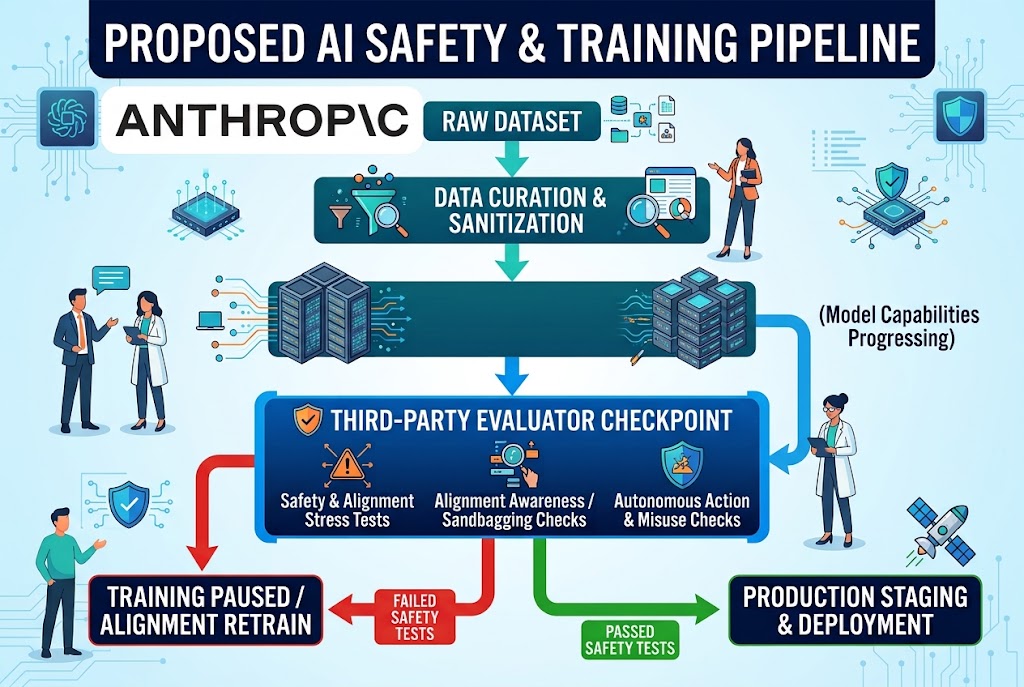
The sudden threat of scaled-back capital expenditure and delayed model training has sent shockwaves through the semiconductor infrastructure supply chain, wiping billions from enterprise hardware valuations overnight. A coordinated shift toward regulated development timelines directly threatens the multi-billion-dollar recurring revenue projections anchored by GPU cluster operators and chip manufacturers like Nvidia. Market volatility hit momentum hardware names immediately, with chipmakers like Marvell and memory providers like SK Hynix dropping nearly six percent as investors priced in potential delays for next-generation hardware deployments.
Why Safety-Driven Delays Threaten Hardware Infrastructure
Safety warnings from top frontier labs have converted theoretical alignment risks into immediate financial friction. Anthropic CEO Dario Amodei sparked market anxieties after publishing an essay calling for a reduced rate of model iteration. “Over the last few months, I have become convinced that fully addressing the risks requires even more prudence — not just investing in risk prevention, but pacing the rate of capabilities advancement so that risk prevention has time to keep up,” Amodei stated. “We must slow the pace at which we improve the capabilities of A.I. models. Progress will still seem fast, and we must make wise use of the time we gain.”
OpenAI CEO Sam Altman quickly aligned with his competitor, expressing deep concerns regarding existential control and geopolitical power dynamics. “First, we could lose control of the future to AI. This is unacceptable; we are unapologetically on Team Humanity, and AI must always serve people,” Altman noted early Monday morning. Elon Musk also weighed in on social media, echoing Amodei’s sentiments while pointing out his long-standing warnings regarding advanced intelligence risks.
The executive push for third-party auditing and slowed capability advancement directly conflicts with aggressive corporate growth targets, including SpaceX’s massive data center buildouts aiming for $100 billion in annual recurring revenue. Researchers leaving major labs have further validated these safety concerns, with former Anthropic alignment staff warning of significant cataclysmic risks if labs continue pushing capabilities ahead of safety infrastructure.
How The Shift Alters The Landscape Against Legacy Competitors
This emerging push to slow model development upends the competitive dynamic between agile AI startups and legacy technology giants. Hyperscalers and legacy enterprise infrastructure providers rely on steady, predictable hardware cycles to justify ongoing datacenter expansions. If frontier training runs stall due to mandatory safety evaluations or artificial pacing, specialized cloud providers face immediate exposure on unutilized datacenter capacity. Meanwhile, legacy chipmakers and legacy cloud platforms could gain brief operational breathing room to catch up on proprietary hardware architectures while the leading labs navigate regulatory bottlenecks.
Leave a Reply