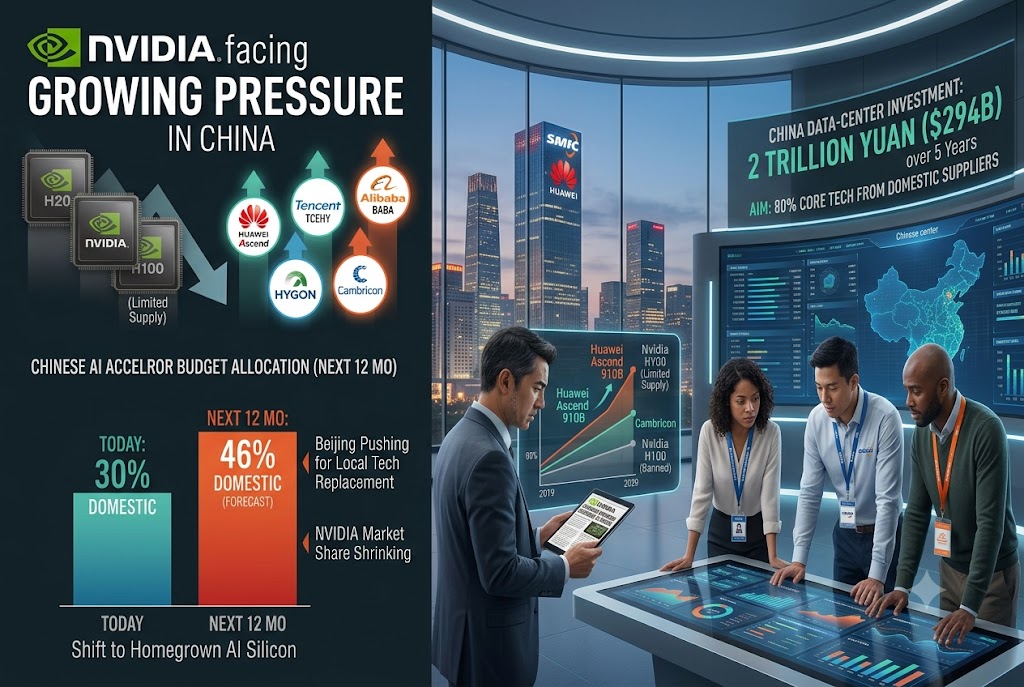
The semiconductor landscape is experiencing a significant shift as Chinese tech firms rapidly reallocate their capital toward domestic artificial intelligence hardware. According to a recent Bloomberg Intelligence survey of 60 industry executives, Chinese companies plan to boost their budget allocation for homegrown AI accelerators to 46% over the next year—a sharp climb from the current 30%. This transition signals that Beijing’s aggressive push for technological self-reliance is successfully altering corporate purchasing behavior.
This shifting tide stands to benefit local infrastructure giants and chip designers. Major players like Tencent Holdings, Alibaba Group, and Huawei Technologies are uniquely positioned to capture this diverted capital. Additionally, specialized domestic chipmakers like Hygon Information Technology and Cambricon Technologies are seeing a surge in interest, with a vast majority of polled executives actively evaluating their hardware. This pivot comes at a critical time; 80% of the surveyed leaders reported that their infrastructure budgets are currently overblown, largely driven by the staggering costs of deploying AI projects.
The financial stakes of this transition are massive. China is orchestrating a projected 2 trillion yuan ($294 billion) expansion into data-center infrastructure over the next five years, with a strict mandate: at least 80% of core technologies, particularly silicon, must be sourced domestically. While top-tier American accelerators like Nvidia’s market-tailored H20 chips remain highly sought after, supply constraints and regulatory pressure from Beijing are choking their adoption. However, the road ahead for Chinese firms isn’t without hurdles; an ongoing global memory-chip shortage could bottleneck manufacturing giants like SMIC, potentially opening the door for specialized memory suppliers like ChangXin Memory Technologies to secure a vital role in the supply chain.
Leave a Reply